Srimad Valmiki Ramayana
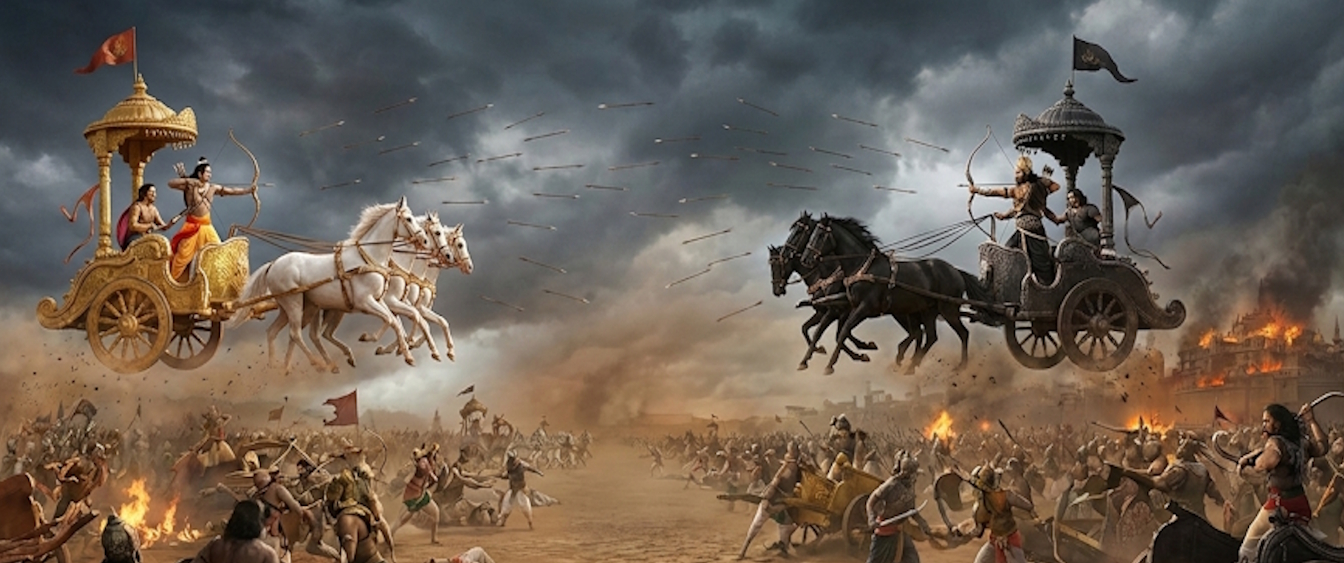
ततः प्रवृत्तं सुमहत् तद्युद्धं रोमहर्षणम् ।
निशाचरैः प्लवङ्गानां देवानां दानवैरिव ॥६-७९-२॥
tataḥ pravṛttaṃ sumahat tadyuddhaṃ romaharṣaṇam |
niśācaraiḥ plavaṅgānāṃ devānāṃ dānavairiva ॥6-79-2॥
Translation
Then, a great and hair-raising battle commenced between the night-stalkers and the monkeys, comparable to the primordial war between the Gods and the Demons.
हिंदी अनुवाद
तब उन निशाचरों और वानरों के बीच वैसा ही रोंगटे खड़े कर देने वाला महान युद्ध छिड़ गया, जैसा प्राचीन काल में देवताओं और दानवों के बीच हुआ था।
English Commentary
Sage Valmiki compares the ferocity of this conflict to the primordial 'Devasura Sangrama.' This analogy serves two purposes: it highlights the epic scale of the battle and reinforces the moral divide, where the Vanaras represent divine forces and the Rakshasas represent demonic ones. The term 'Romaharshanam' (hair-raising) captures the visceral impact of the ensuing violence.
हिंदी टीका
महर्षि वाल्मीकि यहाँ युद्ध की भयंकरता की तुलना 'देवासुर संग्श्री राम' से करते हैं। यह उपमा केवल युद्ध की विशालता को ही नहीं, बल्कि उसके नैतिक पक्ष को भी पुष्ट करती है—जहाँ वानर दैवीय शक्तियों के प्रतीक हैं और निशाचर आसुरी शक्तियों के। 'रोमहर्षणम्' शब्द उस रोमांच और भय के मिश्रण को दर्शाता है जो दर्शक और पाठक के हृदय में उत्पन्न होता है।