Srimad Valmiki Ramayana
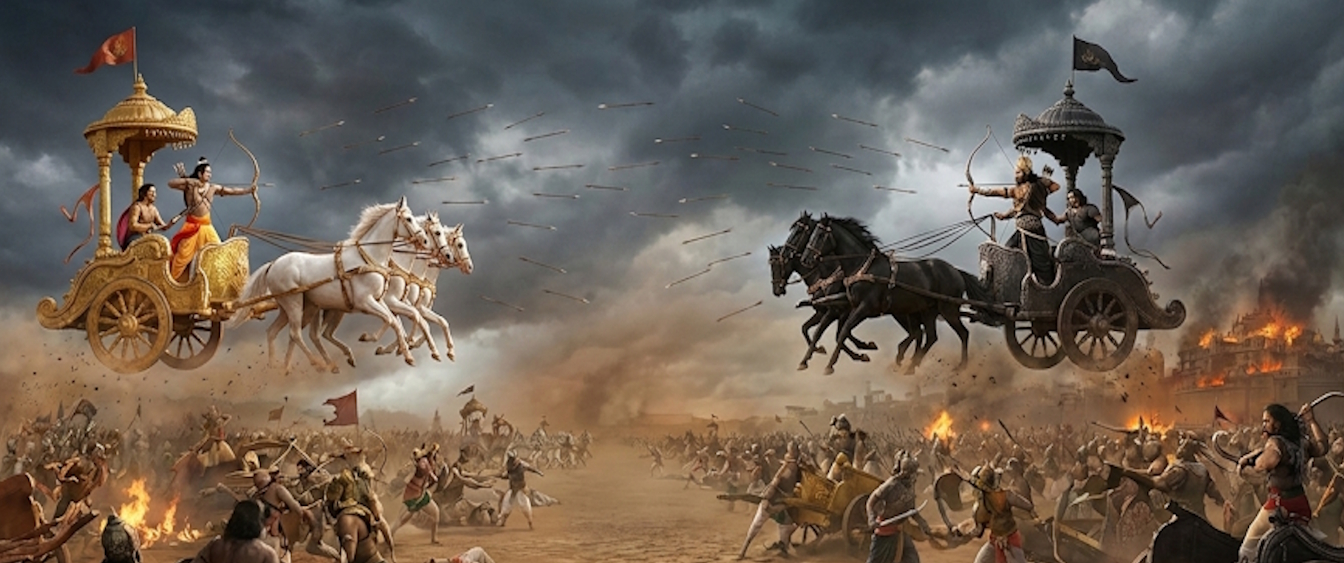
जाज्वल्यमानो वपुषा तपनीयपरिच्छदः ।
मृगैश्चन्द्रार्धचन्द्रैश्च स रथः समलङ्कृतः ॥६-८०-१३॥
jājvalyamāno vapuṣā tapanīyaparicchadaḥ |
mṛgaiścandrārdhacandraiśca sa rathaḥ samalaṅkṛtaḥ ॥6-80-13॥
Translation
He was blazing with his bodily lustre and covered in gold ornaments. That chariot was well-decorated with images of deer, full moons, and crescent moons.
हिंदी अनुवाद
वह (इन्द्रजीत) अपने शरीर से देदीप्यमान हो रहा था और सोने के आभूषणों से ढका हुआ था। वह रथ मृगों, पूर्ण चन्द्रों और अर्धचन्द्रों के चित्रों से भली-भांति अलंकृत था।
English Commentary
Due to the success of the ritual, Indrajit's body possessed a supernatural radiance (Ojas). Gold ornaments reflect his royal status. The depictions of deer and moons on the chariot likely symbolize beauty and speed. This verse presents both the 'heroic' and 'aesthetic' aspects of Indrajit. This adornment before entering the battlefield is akin to a warrior challenging death itself.
हिंदी टीका
यज्ञ की सफलता के कारण इन्द्रजीत के शरीर में एक अलौकिक तेज (ओज) आ गया था। सोने के आभूषण उसकी राजसी प्रतिष्ठा को दर्शाते हैं। रथ पर मृग और चन्द्रमा का चित्रण संभवतः सौन्दर्य और गति का प्रतीक है। यह श्लोक इन्द्रजीत के 'वीर' और 'सुंदर' दोनों रूपों को प्रस्तुत करता है। युद्धभूमि में जाने से पूर्व योद्धा का यह श्रृंगार मृत्यु को चुनौती देने जैसा है।