Srimad Valmiki Ramayana
त्वमप्रतिमकर्माणमिन्द्रं जयसि संयुगे ।
किं पुनर्मानुषौ दृष्ट्वा न वधिष्यसि संयुगे ॥६-८०-४॥
tvamapratimakarmāṇamindraṃ jayasi saṃyuge |
kiṃ punarmānuṣau dṛṣṭvā na vadhiṣyasi saṃyuge ॥6-80-4॥
Translation
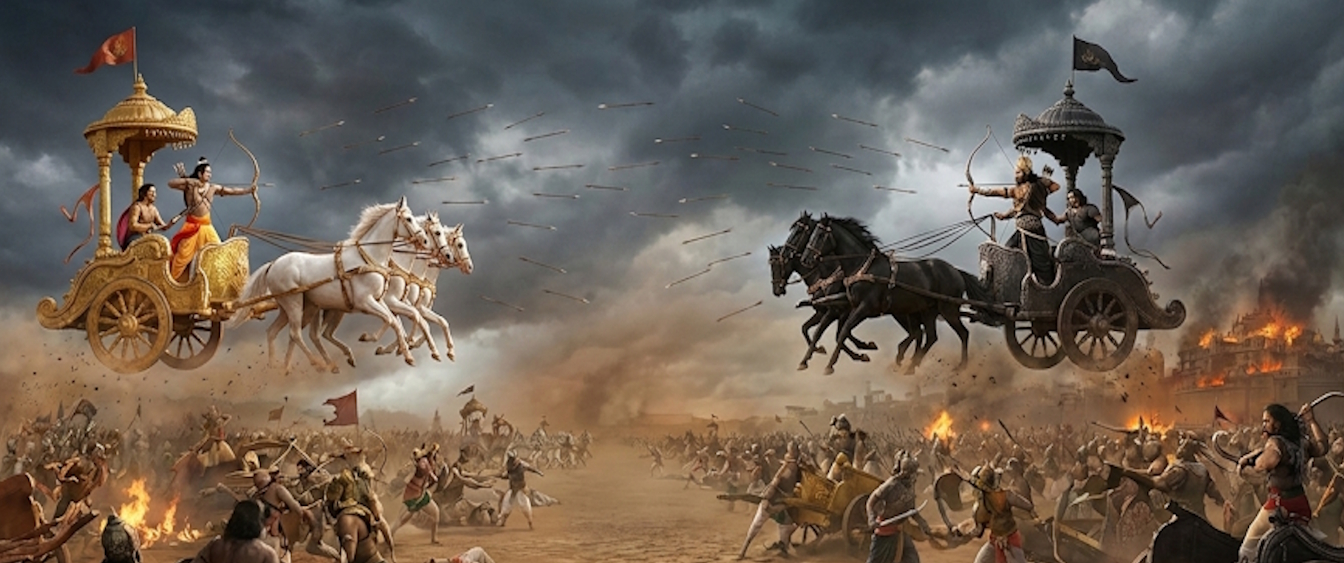
You have conquered Indra, whose deeds are incomparable, in battle. How then, seeing these two mere humans, will you not kill them in combat?
हिंदी अनुवाद
तुमने युद्ध में अतुलनीय कर्म करने वाले इन्द्र को भी जीत लिया है, फिर इन दो मनुष्यों को सामने देखकर तुम युद्ध में इनका वध क्यों नहीं कर पाओगे?
English Commentary
Ravana uses logic and comparison here. The name 'Indrajit' itself signifies the conqueror of Indra. Ravana argues that for one who defeated the King of Gods, two ordinary forest-dwelling humans (Shri Rama and Lakshmana) should pose no threat. This reflects the demonic arrogance and ignorance that views Shri Rama merely as a 'human,' failing to recognize his divine nature. The verse attempts to leverage Indrajit's past glory to solve the present crisis.
हिंदी टीका
रावण यहाँ तर्क और तुलना का प्रयोग कर रहा है। इन्द्रजीत नाम ही इन्द्र को जीतने के कारण पड़ा था। रावण का तर्क है कि जिसने देवताओं के राजा को परास्त कर दिया, उसके लिए दो साधारण वनवासी मनुष्य (श्री राम और लक्ष्मण) क्या बिगाड़ सकते हैं? यह राक्षसी अहंकार और अज्ञान का परिचायक है जो श्री राम को केवल 'मानुष' समझता है, उनके दिव्य स्वरूप को नहीं पहचानता। यह श्लोक इन्द्रजीत के अतीत के गौरव को वर्तमान के संकट समाधान हेतु उपयोग करने का प्रयास है।