Srimad Valmiki Ramayana
अथेन्द्रजिद्राक्षसभूतये तु जुहाव हव्यं विधिना विधानवित् ।
दृष्ट्वा व्यतिष्ठन्त च राक्षसास्ते महासमूहेषु नयानयज्ञाः ॥६-८२-२८॥
athendrajid rākṣasabhūtaye tu juhāva havyaṃ vidhinā vidhānavit |
dṛṣṭvā vyatiṣṭhanta ca rākṣasāste mahāsamūheṣu nayānayajñāḥ ॥6-82-28॥
Translation
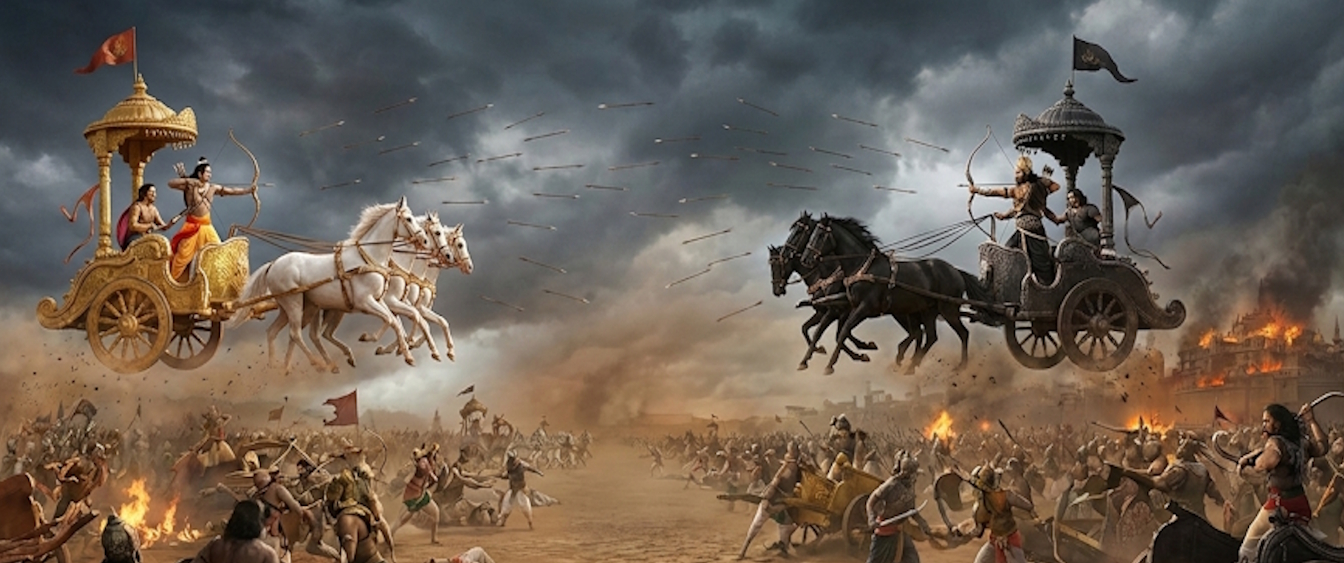
Then Indrajit, the knower of rituals, offered oblations according to the code for the welfare (victory) of the Rakshasas. Seeing him, those Rakshasas, who knew right and wrong policies, stood firm in large groups.
हिंदी अनुवाद
तब राक्षसों के कल्याण (विजय) के लिए विधि-विधान के ज्ञाता इन्द्रजित ने शास्त्रोक्त विधि से आहुतियाँ दीं। उसे देखकर नीति और अनीति को जानने वाले वे राक्षस भी बड़े समूहों में वहाँ डटकर खड़े हो गए।
English Commentary
The sarga concludes with Indrajit's ritual and the regrouping of the Rakshasas. This sacrifice, performed for the 'welfare of the Rakshasas,' symbolizes their final stand for existence. The phrase 'Nayanayajnah' refers to those Rakshasas who knew their path was unrighteous, yet stood behind their leader. This verse depicts the grim silence and preparation before a monumental clash, where unrighteousness is accumulating its full strength.
हिंदी टीका
सर्ग का समापन इन्द्रजित की साधना और राक्षसों के पुनर्गठन के साथ होता है। 'राक्षस-भूतये' (राक्षसों के वैभव के लिए) किया गया यह यज्ञ उनके अस्तित्व की अंतिम लड़ाई का प्रतीक है। 'नयानयज्ञाः' शब्द उन राक्षसों के लिए प्रयुक्त हुआ है जो जानते थे कि उनका मार्ग अनीति का है, फिर भी वे अपने नेता के पीछे खड़े थे। यह श्लोक एक महान संघर्ष से पूर्व की उस गम्भीर शांति और तैयारी को दर्शाता है जहाँ अधर्म अपनी पूरी शक्ति संचित कर रहा है।