Srimad Valmiki Ramayana
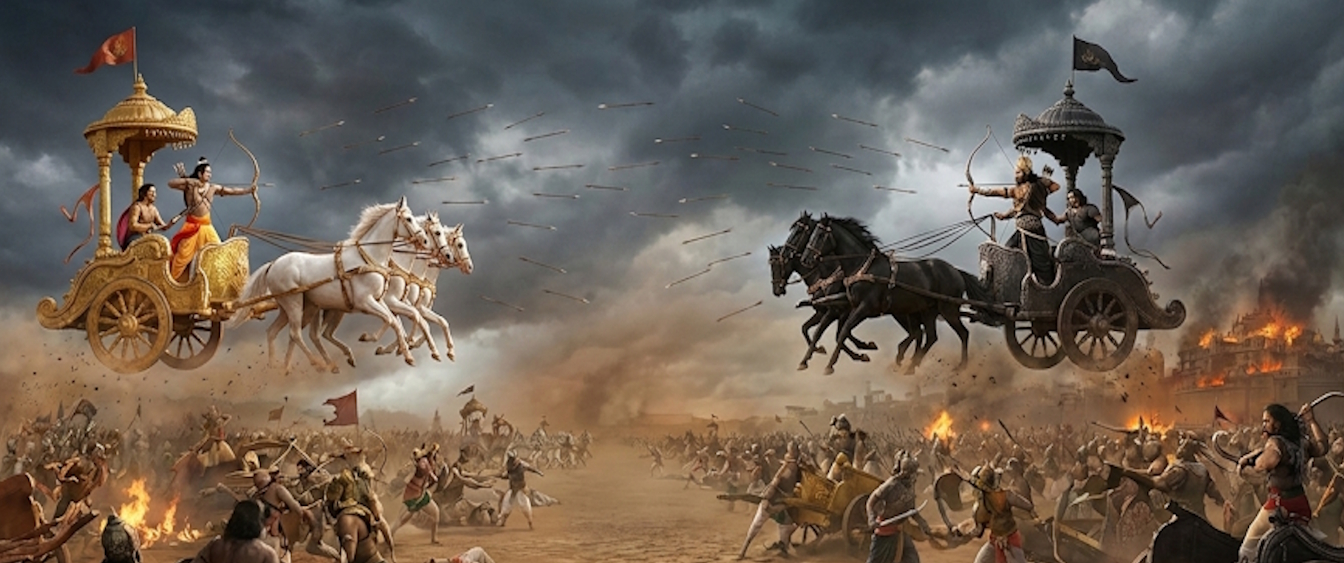
पतत्रिण इवासौम्याः शराः पास्यन्ति शोणितम् ।
तं सन्दिश महावाहो लक्ष्मणं शुभलक्षणम् ॥ ६.८४.२० ॥ राक्षसस्य विनाशाय वज्रं वज्रधरो यथा ॥ ॥६-८४-२०॥
patatriṇa ivāsaumyāḥ śarāḥ pāsyanti śoṇitam |
taṃ sandiśa mahābāho lakṣmaṇaṃ śubhalakṣaṇam |
|
6-84-20|| rākṣasasya vināśāya vajraṃ vajradharo yathā ॥6-84-20॥
Translation
Like terrifying birds of prey, these arrows shall drink his blood. O mighty-armed One! Command the auspiciously marked Lakshmana for the destruction of that Rakshasa, just as Indra (the wielder of thunder) commands his Vajra.
हिंदी अनुवाद
भयानक पक्षियों के समान ये बाण उस राक्षस का रक्त पियेंगे। हे महाबाहु! उस राक्षस के विनाश के लिए आप शुभ लक्षणों वाले लक्ष्मण को वैसे ही आदेश दीजिये, जैसे इन्द्र वज्र को आदेश देते हैं।
English Commentary
The comparison between Shri Lakshmana and the 'Vajra' (thunderbolt) is highly significant. Just as Indra's thunderbolt is infallible and cataclysmic, so are the rage and prowess of Lakshmana. The term 'Shubhalakshanam' implies that Lakshmana's victory is foretold by His auspicious bodily marks. By positioning Shri Rama as Indra ('Vajradhara'), Vibhishana acknowledges His supreme authority. This metaphor highlights the divine dimension of the conflict.
हिंदी टीका
श्री लक्ष्मण और 'वज्र' की तुलना अत्यंत सार्थक है। जैसे इन्द्र का वज्र अचूक और प्रलयंकारी होता है, वैसे ही श्री लक्ष्मण का क्रोध और पराक्रम है। 'शुभलक्षणम्' शब्द यह संकेत देता है कि लक्ष्मण जी की विजय के योग उनके शरीर के शुभ चिन्हों से ही स्पष्ट हैं। विभीषण जी श्री राम को 'वज्रधर' (इन्द्र) के स्थान पर रखकर उनके प्रभुत्व को स्वीकार करते हैं। यह उपमा युद्ध के दैवीय पक्ष को उजागर करती है।