Srimad Valmiki Ramayana
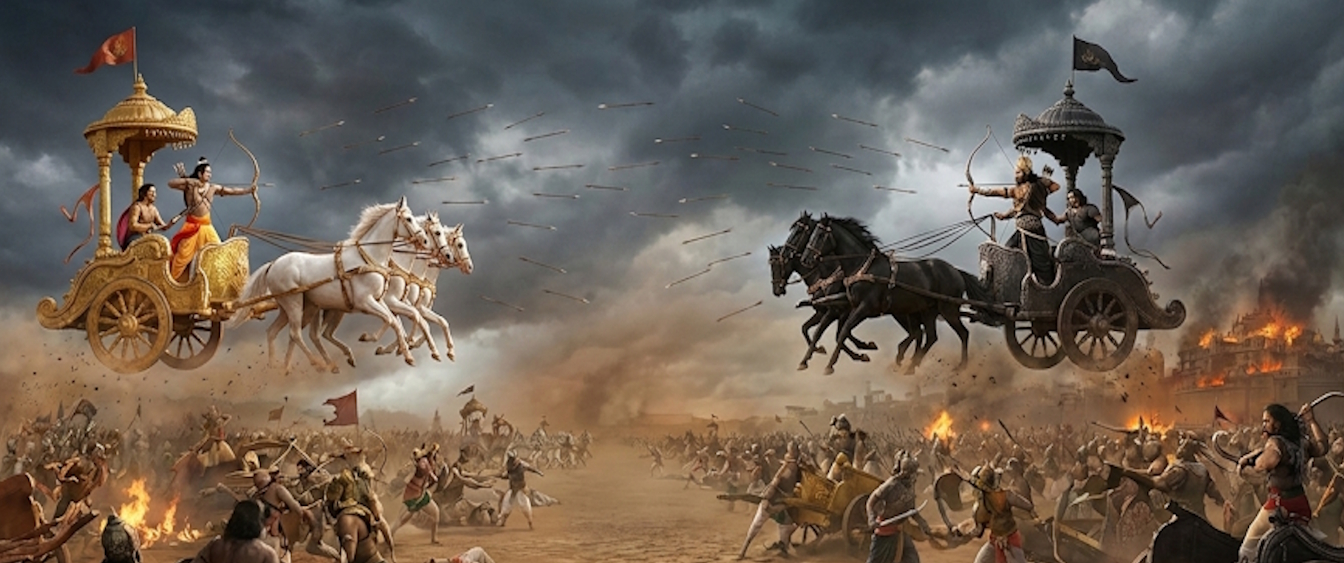
स राक्षसगणैर्मुख्यैर्वृतो मन्दोदरीसुतः ।
निर्ययौ नगरात्तूर्णं कृतान्तबलचोदितः ॥६-९१-११॥
sa rākṣasagaṇairmukhyaīrvṛta rto mandodarīsutaḥ |
niryayau nagarāttūrṇaṃ kṛtāntabalacoditaḥ ॥6-91-11॥
Translation
Surrounded by the principal Rakshasa hosts, the son of Mandodari (Indrajit) quickly marched out of the city, driven by the force of Fate (Kritanta).
हिंदी अनुवाद
मुख्य राक्षस गणों से घिरे हुए मन्दोदरी पुत्र इन्द्रजित, काल की प्रेरणा (नियत भाग्य) से प्रेरित होकर शीघ्र ही नगर से बाहर निकले।
English Commentary
The terms 'Mandodari-sutah' and 'Kritanta-bala-choditah' are deeply significant. As Mandodari's son, he should have possessed refined virtues, but he was under the sway of Fate. 'Kritanta' (Time or Death) was driving him toward the battlefield where his end was certain. This verse conveys that when one's demise is near, even their own zeal pulls them toward destruction.
हिंदी टीका
यहाँ 'मन्दोदरी-सुतः' और 'कृतान्त-बल-चोदितः' शब्द अत्यंत गूढ़ हैं। मन्दोदरी के पुत्र होने के नाते उसमें उच्च संस्कार होने चाहिए थे, किन्तु वह काल के वश में था। 'कृतान्त' (यमराज या मृत्यु) उसे रणभूमि की ओर ले जा रहा था, जहाँ उसका अंत निश्चित था। यह श्लोक यह संदेश देता है कि जब व्यक्ति का अंत निकट होता है, तो उसका स्वयं का उत्साह भी उसे विनाश की ओर ही खींचता है।