Srimad Valmiki Ramayana
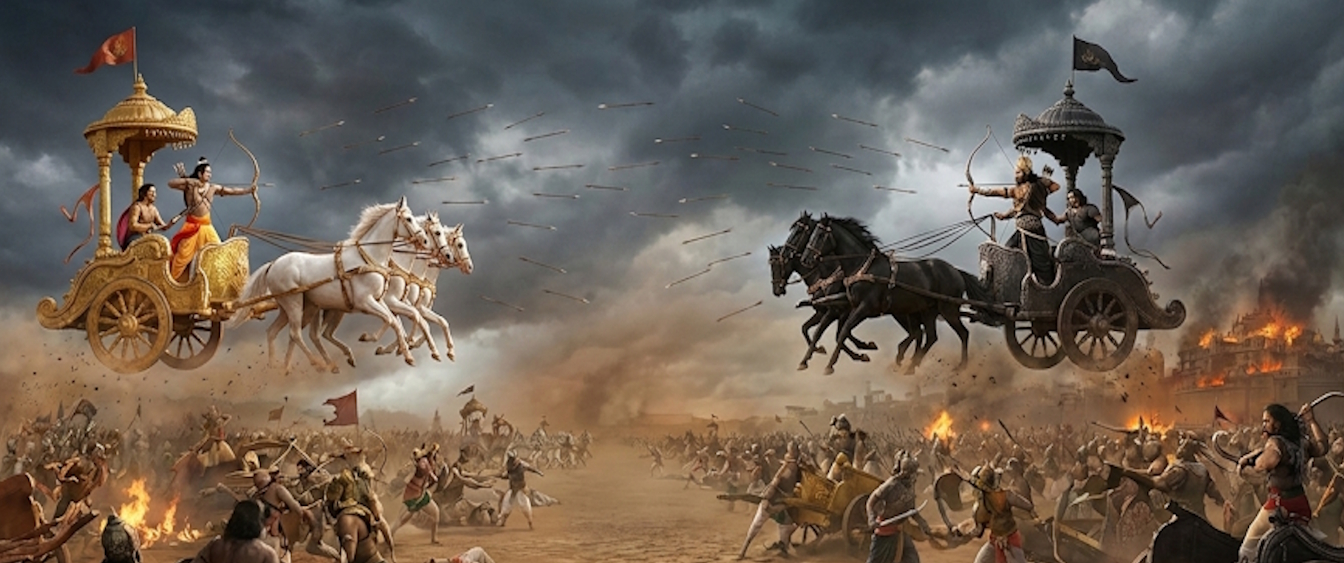
हरीनभ्यहनत् क्रुद्धः परं लाघवमास्थितः ।
ते वध्यमाना हरयो नाराचैर्भीमविक्रमाः ॥६-९१-१६॥
harīnabhyahanat krūddhaḥ paraṃ lāghavamāsthitaḥ |
te vadhyamānā harayo nārācairbhīmavikramāḥ ॥6-91-16॥
Translation
Filled with rage and displaying supreme agility, he struck the monkeys. When those Vanaras of fearsome prowess were being slain by the iron-shafted arrows (Narachas)—
हिंदी अनुवाद
अत्यंत क्रोधित होकर और परम फूर्ती दिखाते हुए उसने वानरों पर प्रहार किया। भयंकर पराक्रम वाले वे वानर जब लोहे के तीखे बाणों (नाराच) से मारे जाने लगे—
English Commentary
After the momentum gained by the Vanaras following Makaraksha's death, Indrajit put them in peril again with his 'Naracha' (solid iron) arrows. The phrase 'Param Laghavam' signifies his lightning-fast speed. Though valiant, the Vanaras were unable to counter these sharp missiles as they lacked equivalent weaponry. This moment depicts Rakshasa technology temporarily prevailing over Vanara strength.
हिंदी टीका
मकराक्ष के वध के बाद वानरों ने जो बढ़त बनाई थी, उसे इन्द्रजित ने 'नाराच' (पूरी तरह लोहे के बने घातक बाण) के प्रहारों से पुनः संकट में डाल दिया। 'परं लाघवम्' शब्द उसकी बिजली जैसी गति को सूचित करते हैं। वानर पराक्रमी तो थे, किन्तु अस्त्रहीन होने के कारण वे इन तीखे बाणों का सामना करने में असमर्थ थे। यह युद्ध का वह क्षण है जहाँ राक्षसी तकनीक वानर बल पर हावी होती दिख रही है।