Srimad Valmiki Ramayana
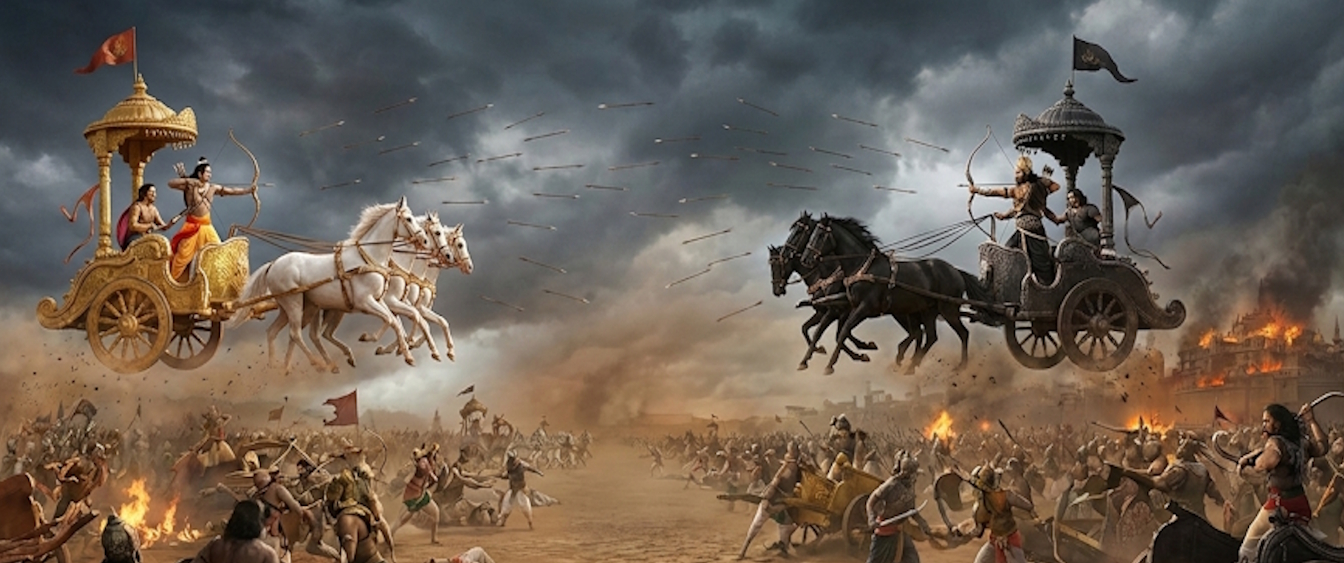
विभीषणो महातेजा रावणेः स दुरात्मनः ।
स हताश्वादवप्लुत्य रथान्निहतसारथेः ॥६-९१-४३॥
vibhīṣaṇō mahātējā rāvaṇeḥ sa durātmanaḥ |
sa hatāśvādavaplutya rathānnihatasāratheḥ ॥6-91-43॥
Translation
The highly radiant Vibhishana (slew the steeds) of that evil-souled son of Ravana. With his horses killed and his charioteer destroyed, he (Indrajit) leaped down from the chariot.
हिंदी अनुवाद
महातेजस्वी विभीषण ने उस दुरात्मा इन्द्रजित के (घोड़ों को मारा)। घोड़ों के मारे जाने और सारथी के नष्ट होने पर वह (इन्द्रजित) रथ से नीचे कूद गया।
English Commentary
Shri Vibhishana proves his 'Mahatejas' (great brilliance) by siding with Dharma despite his origins. Indrajit's leap from the chariot is a sign of his tactical desperation. The word 'Duratmanah' (evil-souled) reaffirms the immorality of his actions. Indrajit was once again forced to engage in ground combat.
हिंदी टीका
विभीषण जी यहाँ 'महातेजस्वी' सिद्ध हो रहे हैं क्योंकि वे अधर्म के गढ़ में रहकर भी धर्म का पक्ष ले रहे हैं। इन्द्रजित का रथ से कूदना उसकी सामरिक विवशता का प्रतीक है। 'दुरात्मनः' शब्द उसके कृत्यों की अनैतिकता को पुनः रेखांकित करता है। अब इन्द्रजित को पुनः भूमि पर आकर युद्ध करना पड़ रहा था।