Srimad Valmiki Ramayana
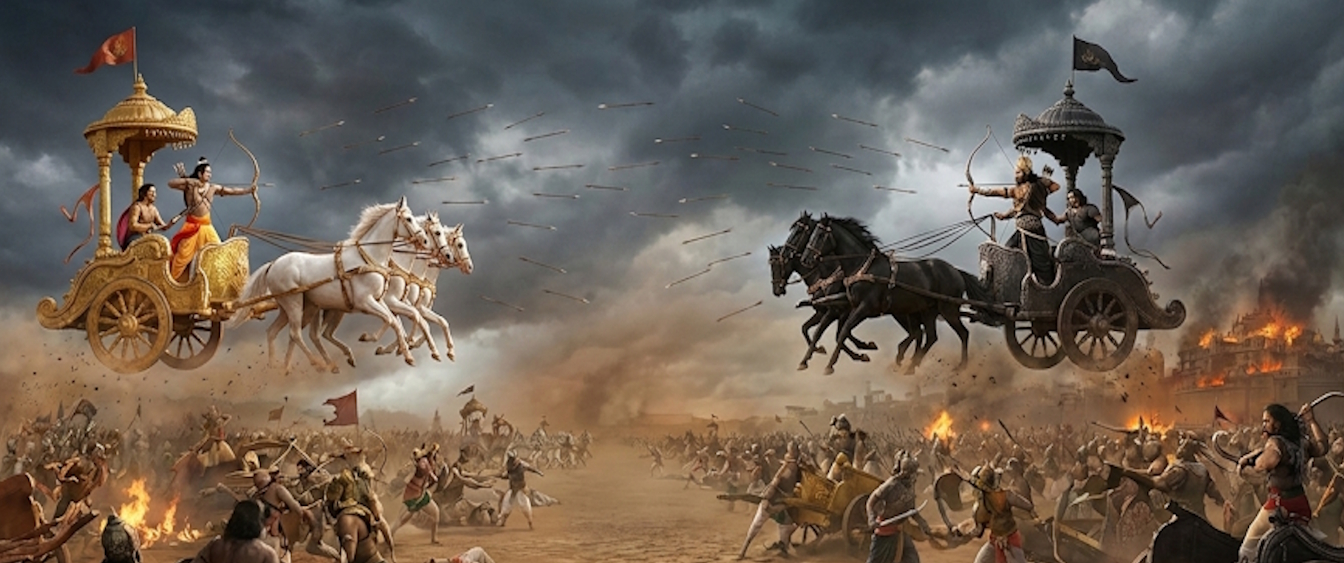
दुर्जयं दुर्विषह्यं च सेन्द्रैरपि सुरासुरैः ।
तयोस्ते धनुषी श्रेष्ठे बाहुभिः परिघोपमैः ॥६-९१-५०॥
durjayaṃ durviṣahyaṃ ca sendraīrapi surāsuraīḥ |
tayo ste dhanuṣī śreṣṭhe bāhubhiḥ parighopamaīḥ ॥6-91-50॥
Translation
That arrow was invincible and unbearable even for the Gods led by Indra and for the Demons. Those two, with arms as strong as iron clubs, (drew) their excellent bows—
हिंदी अनुवाद
वह बाण इन्द्र सहित देवताओं और असुरों के लिए भी दुर्जेय और असहनीय था। परिघ के समान पुष्ट भुजाओं वाले उन दोनों ने अपने श्रेष्ठ धनुषों को—
English Commentary
The 'Durjaya' (invincible) and 'Durvishahya' (unbearable) nature of the arrow affirms its massive power. Comparing the arms of Shri Lakshmana and Indrajit to 'Parigha' (iron clubs) signifies their boundless strength. This verse portrays the tension and gravity of the moment when the two finest archers of the universe were prepared for their final strike.
हिंदी टीका
बाण की 'दुर्जय' (जिसे जीता न जा सके) और 'दुर्विषह्य' (असहनीय) प्रकृति उसकी प्रचंड शक्ति को पुष्ट करती है। श्री लक्ष्मण और इन्द्रजित की भुजाओं की तुलना 'परिघ' (लोहे की छड़) से करना उनके असीमित बल का सूचक है। यह श्लोक उस क्षण के तनाव और गम्भीरता को चित्रित करता है जहाँ ब्रह्मांड के दो श्रेष्ठतम धनुर्धर अपने अंतिम प्रहार के लिए उद्यत थे।