Srimad Valmiki Ramayana
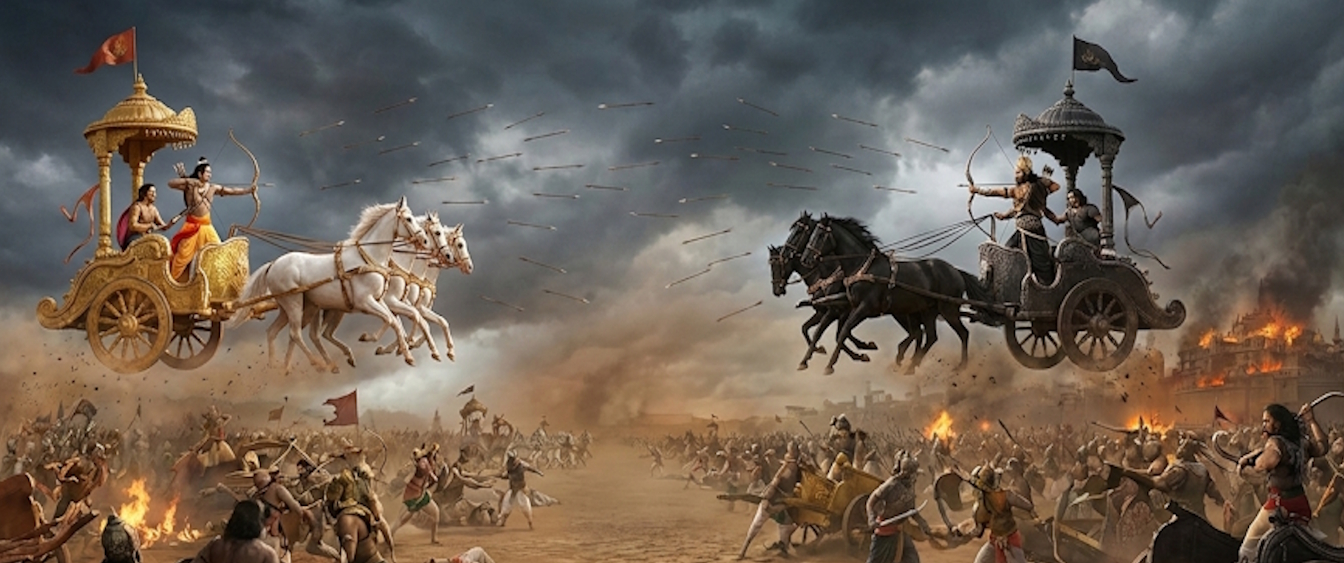
विकृष्यमाणे बलवत् क्रौञ्चाविव चुकूजतुः ।
ताभ्यां तौ धनुषि श्रेष्ठे संहितौ सायकोत्तमौ ॥६-९१-५१॥
vikṛṣyamāṇe balavat krauñcāviva cukūjatuḥ |
tābhyāṃ tau dhanuṣi śreṣṭhe saṃhitau sāyakottamau ॥6-91-51॥
Translation
When they forcefully drew their bows, they made sounds like the cries of Krauncha birds. Both of them fixed those excellent arrows upon their superior bows.
हिंदी अनुवाद
जब उन्होंने बलपूर्वक धनुष खींचे, तो वे क्रौंच पक्षियों के समान मधुर और तीव्र शब्द करने लगे। उन दोनों ने अपने श्रेष्ठ धनुषों पर उन उत्तम बाणों का संधान किया।
English Commentary
Comparing the sound of the drawing bowstrings to the cries of 'Krauncha' birds is a mark of extraordinary poetic skill. It expresses the rhythm of war and the underlying pathos. Aiming the 'Sayakottamau' (best of arrows) suggests that no ordinary strike was to follow. This is the preamble to the final slaughter, where total concentration was focused on a single point.
हिंदी टीका
धनुष की डोरी खींचने से उत्पन्न ध्वनि की तुलना 'क्रौंच' पक्षी के रुदन से करना एक अद्भुत काव्य कौशल है। यह शब्द युद्ध की लय और उसके भीतर छिपी करुणा को भी व्यक्त करता है। 'सायकोत्तमौ' (उत्तम बाण) का संधान यह संकेत देता है कि अब कोई साधारण प्रहार नहीं होने वाला। यह अंतिम संहार की पूर्वपीठिका है, जहाँ सम्पूर्ण एकाग्रता एक बिंदु पर सिमट गई थी।