Srimad Valmiki Ramayana
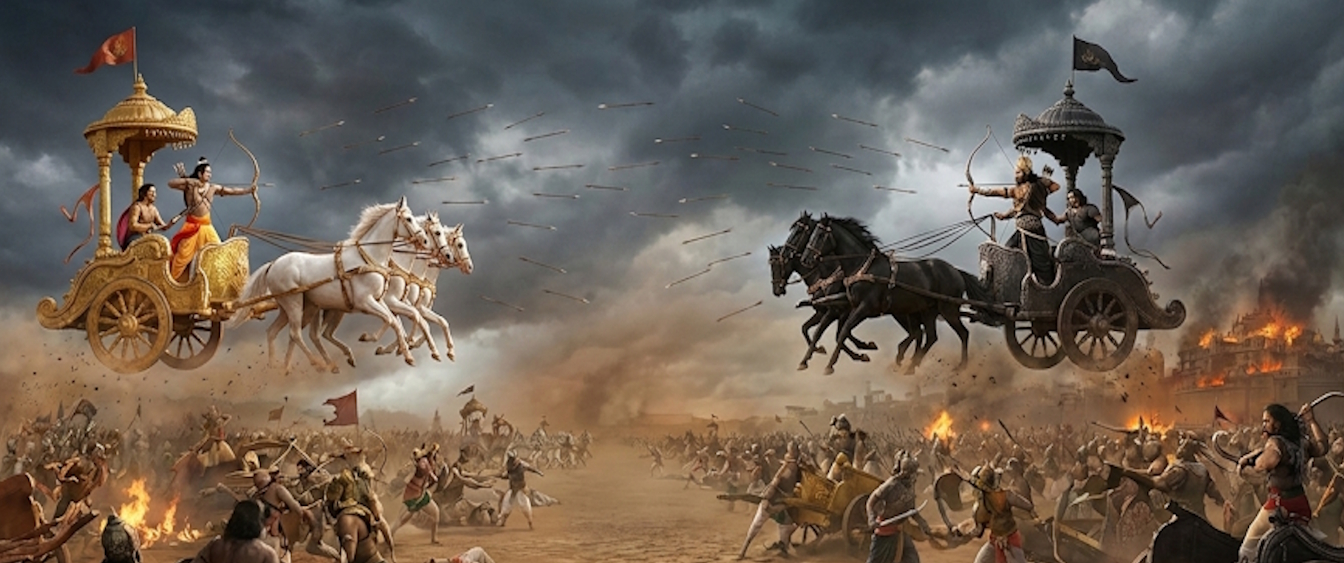
तपनीयनिभं भूमौ ददृशे रुधिरोक्षितम् ।
हतस्तु निपपाताशु धरण्यां रावणात्मजः ॥६-९१-७७॥
tapanīyanibhaṃ bhūmau dadṛśe rudhirokṣitam |
hatastu nipapātāśu dharaṇyāṃ rāvaṇātmajaḥ ॥6-91-77॥
Translation
Looking like refined gold and bathed in blood, the head was seen on the ground. Thus killed, the son of Ravana fell quickly onto the earth.
हिंदी अनुवाद
तपाए हुए सोने के समान आभा वाला और रक्त से लथपथ वह सिर पृथ्वी पर दिखाई पड़ा। इस प्रकार मारा जाकर वह रावणपुत्र शीघ्र ही धरती पर गिर पड़ा।
English Commentary
The poet uses a striking metaphor here. Despite Indrajit being a cruel Rakshasa, his physical radiance is compared to 'tapaniya' (refined gold), reflecting his royal lineage and the power acquired through his penances. The image of the golden hue mixed with blood creates a vivid contrast, blending the ghastly nature of death with the glory of a fallen warrior. The fall of Ravana's son signifies the beginning of the end for Lanka, as he was Ravana's most formidable defender.
हिंदी टीका
कवि ने यहाँ अद्भुत उपमा का प्रयोग किया है। यद्यपि इंद्रजित एक क्रूर राक्षस था, उसका तेज और शारीरिक कांति 'तपनीय' (तपाए हुए सोने) के समान थी, जो उसके राजसी वंश और तपस्या के प्रभाव को दर्शाती है। रक्त से लथपथ होने के बावजूद उसकी कांति बनी हुई थी, जो युद्ध की वीभत्सता और वीर रस का मिश्रण प्रस्तुत करती है। रावणपुत्र का गिरना लंका के पतन की शुरुआत का संकेत है, क्योंकि वह रावण का सबसे शक्तिशाली योद्धा और रक्षक था।