Srimad Valmiki Ramayana
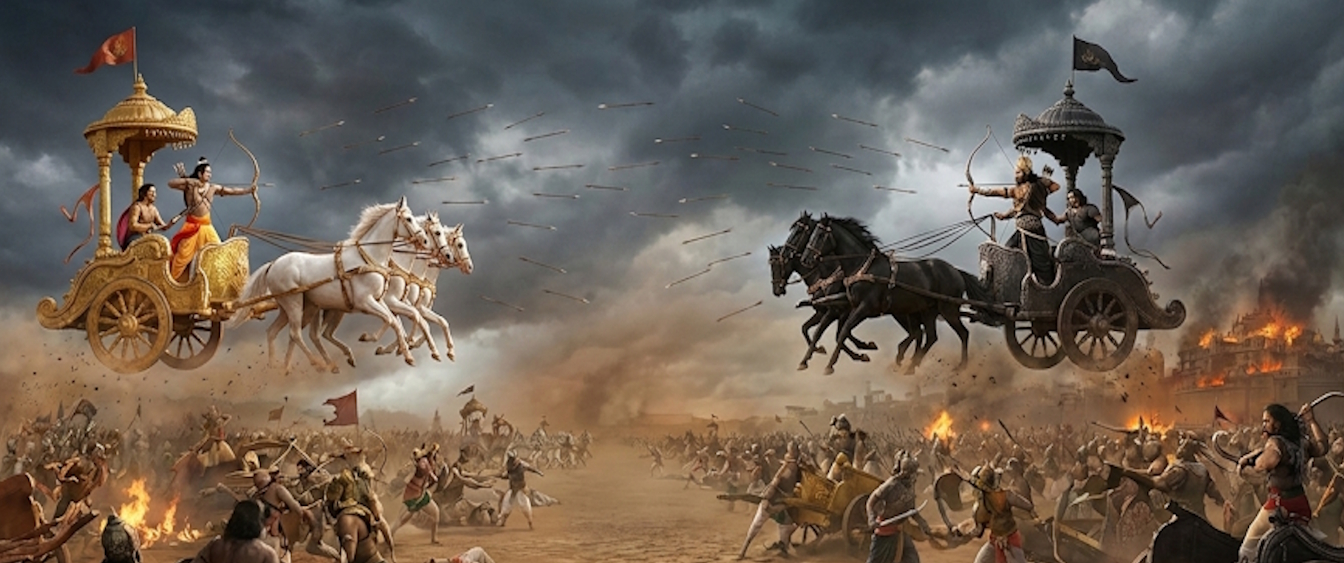
रक्षसां वानराणां च शान्तं शोणितविस्रवैः ।
मातङ्गरथकूलाश्च वाजिमत्स्या ध्वजद्रुमाः ॥६-९४-११॥
rakṣasāṃ vānarāṇāṃ ca śāntaṃ śoṇitavisravaiḥ |
mātaṅgarathakūlāśca vājimatsyā dhvajadrumāḥ ॥6-94-11॥
Translation
The dust was settled by the streams of blood from the Rakshasas and Vanaras. Rivers of blood flowed, with elephants and chariots as banks, horses as fish, and flags as trees.
हिंदी अनुवाद
राक्षसों और वानरों के रक्त के प्रवाह से वह धूल शांत हो गई। (वहाँ रक्त की नदियाँ बहने लगीं) जिसके किनारे हाथी और रथ थे, घोड़े जिसमें मछलियों के समान थे और ध्वजाएँ वृक्षों के समान थीं।
English Commentary
Valmiki uses a gruesome yet poetic metaphor here. The dust mentioned in the previous verse is settled not by water, but by the copious amount of blood shed. The battlefield is likened to a river, transforming the scene of carnage into a landscape where the debris of war (chariots, flags) and dead animals mimic natural features of a riverbank.
हिंदी टीका
कवि ने यहाँ एक वीभत्स रस से परिपूर्ण रूपक का प्रयोग किया है। युद्ध की भयानकता इतनी अधिक थी कि उड़ती हुई धूल रक्त की वर्षा से दब गई। युद्धभूमि एक नदी बन गई, जहाँ मृत हाथी और टूटे रथ नदी के तट जैसे प्रतीत हो रहे थे। यह वर्णन विनाश के व्यापक स्तर को दर्शाता है।