Srimad Valmiki Ramayana
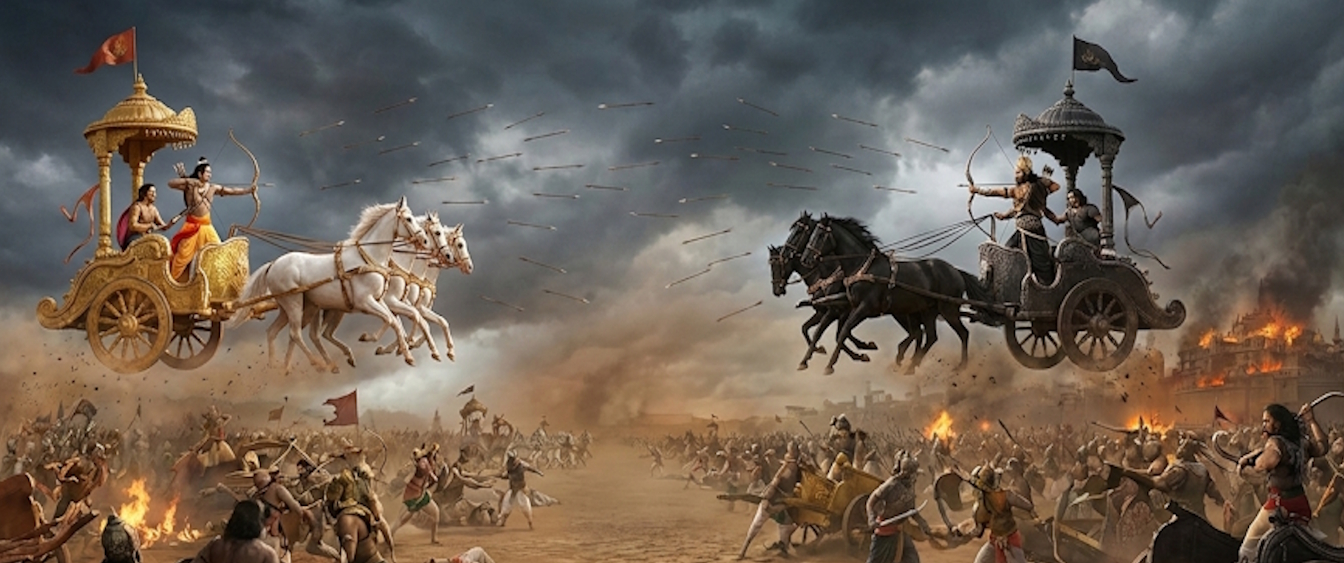
ततो निष्पततो युद्धे दशग्रीवस्य रक्षसः ।
रणे निधनशंसीनि रूपाण्येतानि जज्ञिरे ॥६-९६-४३॥
tato niṣpatato yuddhe daśagrīvasya rakṣasaḥ |
raṇe nidhanaśaṃsīni rūpāṇyetāni jajñire ॥6-96-43॥
Translation
As the ten-headed Rakshasa (Ravana) set out for battle, these various signs forecasting his death in the conflict became manifest.
हिंदी अनुवाद
युद्ध के लिए निकलते हुए उस दस मुख वाले राक्षस (रावण) के सामने युद्ध में उसकी मृत्यु की सूचना देने वाले ये अनेक रूप (चिह्न) प्रकट हुए।
English Commentary
Sage Valmiki clarifies that these were not random events but 'Nidhanashamsini' (death-forecasting) divine portents. Being 'Dashagriva' (ten-headed) implies he possessed ten times the intellect and power, yet he was blinded to these clear signs. This verse underscores the inexorable nature of destiny when one is marked for ruin.
हिंदी टीका
महर्षि वाल्मीकि यहाँ स्पष्ट करते हैं कि ये कोई सामान्य घटनाएँ नहीं थीं, बल्कि 'निधनशंसीनि' (मृत्यु की सूचना देने वाले) दिव्य संकेत थे। रावण के 'दशग्रीव' (दस सिरों वाला) होने का अर्थ था कि उसके पास दस गुना अधिक बुद्धि और शक्ति होनी चाहिए थी, फिर भी वह इन संकेतों को पढ़ने में विफल रहा। यह श्लोक नियति की अटल शक्ति को रेखांकित करता है।