Srimad Valmiki Ramayana
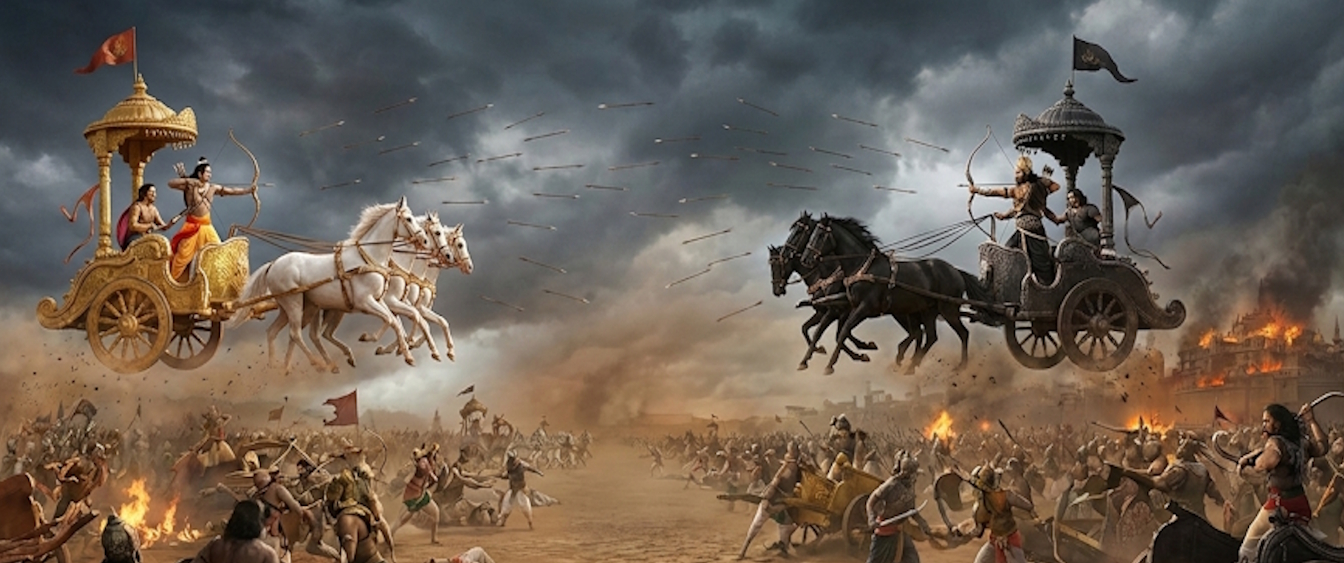
एतानचिन्तयन् घोरानुत्पातान् समुपस्थितान् ।
निर्ययौ रावणो मोहाद्वधार्थी कालचोदितः ॥६-९६-४५॥
etānacintayan ghorānutpātān samupasthitān |
niryayau rāvaṇo mohād vadhārthī kālacoditaḥ ॥6-96-45॥
Translation
Disregarding these terrible portents that had arisen, Ravana, driven by delusion and impelled by Fate (Time), marched out to meet his death.
हिंदी अनुवाद
इन भयंकर उपस्थित अपशकुनों की चिंता न करते हुए, रावण मोहवश और काल की प्रेरणा (मृत्यु के बुलावे) से वध होने के लिए बाहर निकल पड़ा।
English Commentary
This illustrates the psychological maxim: 'When destruction is near, the intellect is perverted.' Ravana's disregard for the omens ('Acintayan') is proof of his total delusion ('Mohad'). The phrase 'Kala-coditah' (impelled by Time/Death) suggests that Fate itself had clouded his mind to ensure justice. In his attempt to act heroic, he was actually marching toward his own execution.
हिंदी टीका
यह श्री रामायण का अत्यंत प्रसिद्ध मनोवैज्ञानिक सूत्र है—'विनाशकाले विपरीत बुद्धि'। रावण का अपशकुनों की उपेक्षा करना 'अचिन्तयन्' (बिना सोचे) उसके पूर्णतः मोहग्रस्त होने का प्रमाण है। 'काल-चोदितः' शब्द यह बताते हैं कि अब काल ने स्वयं उसकी बुद्धि हर ली थी ताकि उसका विनाश सुनिश्चित हो सके। वह वीर बनने के प्रयास में वास्तव में अपनी अंत्येष्टि की ओर बढ़ रहा था।