Srimad Valmiki Ramayana
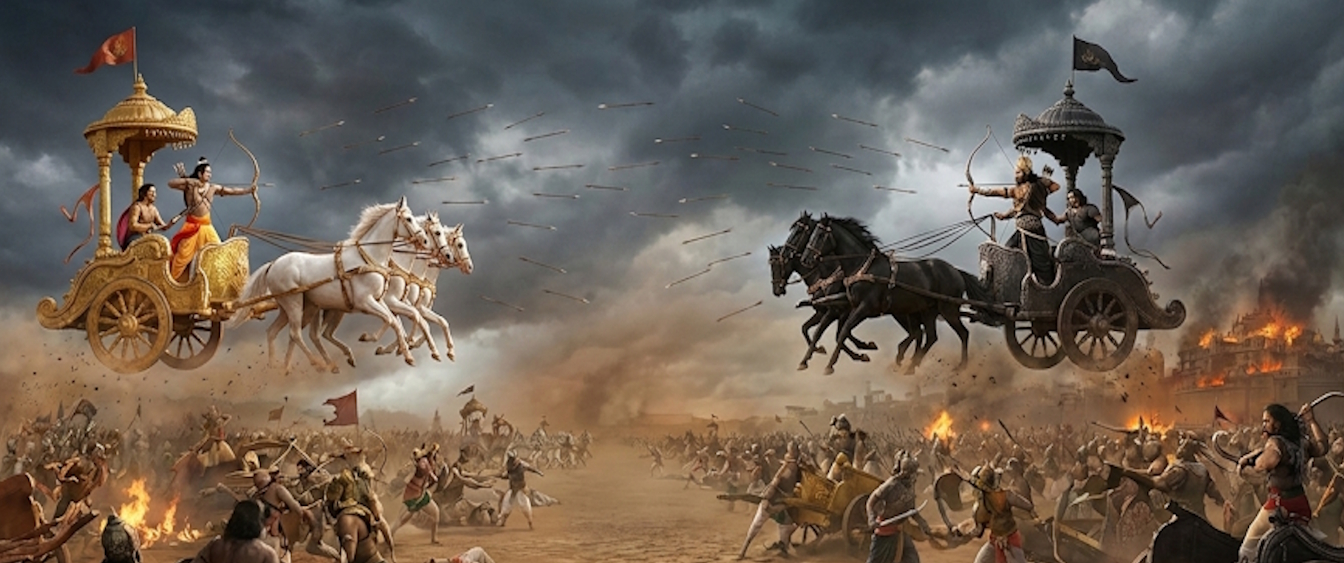
राक्षसानामनीकेषु शैलवर्षं ववर्ष ह ।
अश्मवर्षं यथा मेघः पक्षिसङ्घेषु कानने ॥६-९७-११॥
rākṣasānāmanīkeṣu śailavarṣaṃ vavarṣa ha |
aśmavarṣaṃ yathā meghaḥ pakṣisaṅgheṣu kānane ॥6-97-11॥
Translation
He rained a shower of rocks/mountains upon the Rakshasa armies, just as a cloud rains stones (hail) upon a flock of birds in a forest.
हिंदी अनुवाद
उन्होंने राक्षस सेनाओं पर शिलाओं की वर्षा उसी प्रकार की, जैसे वन में पक्षियों के समूह पर बादल ओलों (पत्थरों) की वर्षा करता है।
English Commentary
The tables have turned. Earlier, the Vanaras were like moths; now the Rakshasas are compared to a 'flock of birds' ('pakṣisaṅgheṣu') caught in a hailstorm. Sugriva is the storm cloud ('megha'). This signifies a shift in momentum where the Vanara King asserts dominance over the Rakshasa infantry.
हिंदी टीका
यहाँ राक्षसों की तुलना 'पक्षियों' से और सुग्रीव की 'मेघ' से की गई है। पक्षी ओलों के सामने असहाय होते हैं, वैसे ही राक्षस सुग्रीव द्वारा फेंके गए पर्वतों के सामने असहाय थे। यह भूमिका परिवर्तन है—अब तक राक्षस हावी थे, अब सुग्रीव हावी हैं।