Srimad Valmiki Ramayana
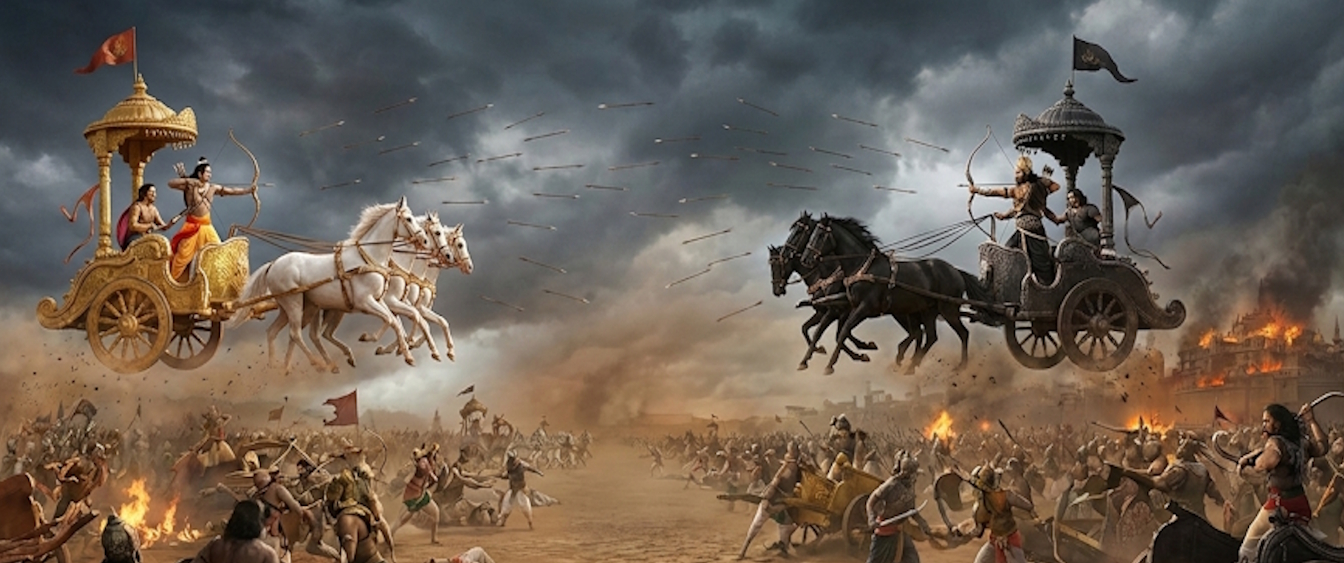
रावणस्याप्रसह्यं तं शरसम्पातमेकतः ।
न शेकुः सहितुं दीप्तं पतङ्गा ज्वलनं यथा ॥६-९७-२॥
rāvaṇasyāprasahyaṃ taṃ śarasampātamekataḥ |
na śekuḥ sahituṃ dīptaṃ pataṅgā jvalanaṃ yathā ॥6-97-2॥
Translation
Just as moths cannot withstand a blazing fire, the monkeys could not endure that unbearable shower of arrows from Ravana.
हिंदी अनुवाद
जैसे पतंगे प्रज्वलित अग्नि को सहन नहीं कर सकते, वैसे ही वानर रावण की उस असहनीय बाण-वर्षा को सहन करने में समर्थ नहीं हो सके।
English Commentary
Valmiki uses a powerful simile here, comparing the Vanaras to moths ('pataṅgā') and Ravana's arrow shower to a blazing fire ('jvalanaṃ'). This analogy illustrates the futility of the Vanaras' initial resistance; just as moths are instantly consumed by fire, the monkeys were decimated by Ravana's onslaught. It underscores the destructive nature of the enemy.
हिंदी टीका
वाल्मीकि श्री रामायण में उपमाओं का सुंदर प्रयोग मिलता है। यहाँ वानरों की तुलना 'पतंगों' से और रावण की बाण-वर्षा की तुलना 'प्रज्वलित अग्नि' से की गई है। जैसे पतंगे आग के पास जाते ही नष्ट हो जाते हैं, वैसे ही वानर रावण के सामने टिक नहीं पा रहे थे। यह उपमा रावण के तेज और वानरों की विवशता को स्पष्ट करती है।