Srimad Valmiki Ramayana
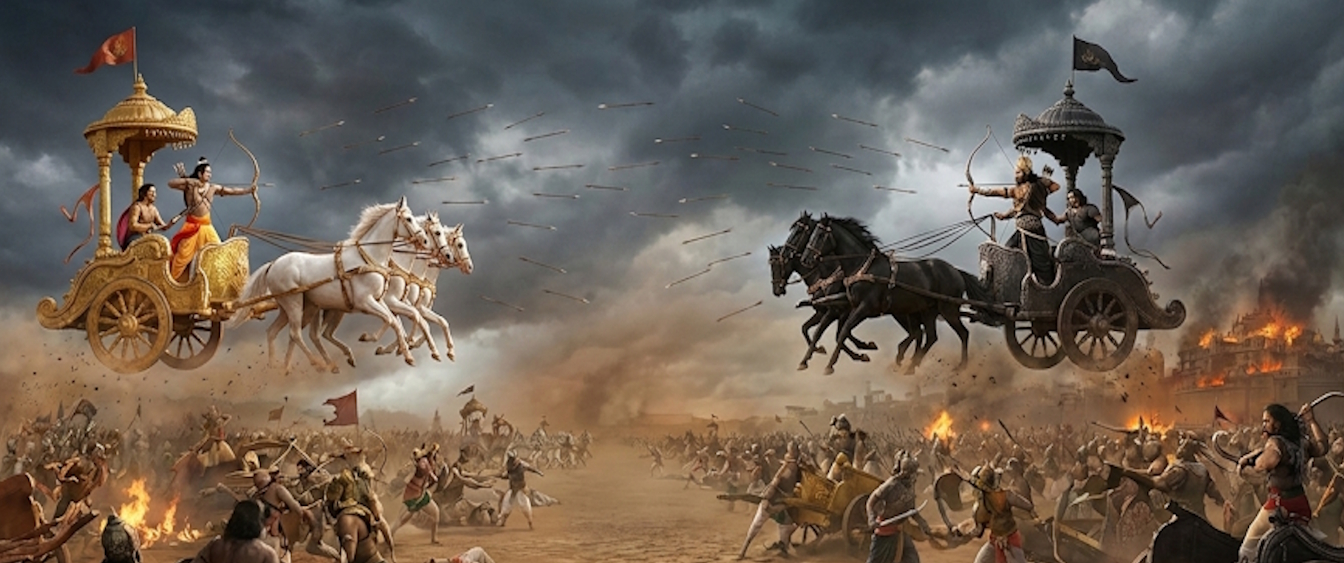
महोदरं तं विनिपात्य भूमौ महागिरेः कीर्णमिवैकदेशम् ।
सूर्यात्मजस्तत्र रराज लक्ष्म्या सूर्यः स्वतेजोभिरिवाप्रधृष्यः ॥६-९८-३७॥
mahodaraṃ taṃ vinipātya bhūmau mahāgireḥ kīrṇamivaikadeśam |
sūryātmajastatra rarāja lakṣmyā sūryaḥ svatejobhirivāpradhṛṣyaḥ ॥6-98-37॥
Translation
Having felled Mahodara, who looked like a shattered piece of a huge mountain, to the ground, the son of the Sun (Sugriva) shone there with glory, just as the Sun is unassailable with his own brilliance.
हिंदी अनुवाद
महोदर को, जो विशाल पर्वत के एक टूटे हुए टुकड़े के समान लग रहा था, भूमि पर गिराकर, सूर्यपुत्र (सुग्रीव) अपनी शोभा (लक्ष्मी) से वैसे ही सुशोभित हुए जैसे अपने तेज से सूर्य (सुशोभित होता है)।
English Commentary
A parallel is drawn between father and son. Sugriva is 'Suryatmaja' (son of the Sun), and after the victory, he appeared 'apradhrishya' (unassailable) and radiant just like his father. Comparing Mahodara to a 'piece of a mountain' underscores his massive size one last time.
हिंदी टीका
यहाँ पिता और पुत्र का साम्य स्थापित किया गया है। सुग्रीव 'सूर्यात्मज' हैं, और विजय के बाद वे अपने पिता सूर्य के समान ही 'अप्रधृष्य' (जिसका कोई सामना न कर सके) और तेजस्वी लग रहे थे। महोदर की तुलना 'पर्वत के टुकड़े' से करना उसके विशाल आकार को अंतिम बार रेखांकित करता है।