Srimad Valmiki Ramayana
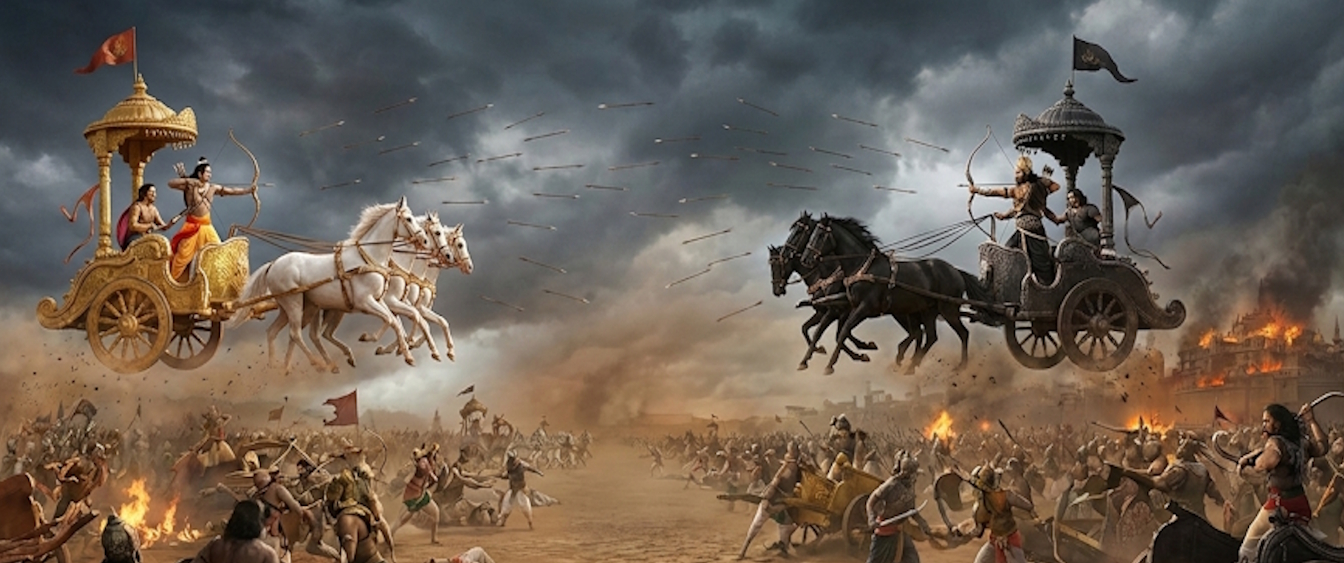
अथेन्द्रशत्रुस्त्रिदिवालयानां वनौकसां चैव महाप्रणादम् ।
श्रुत्वा सरोषं युधि राक्षसेन्द्रः पुनश्च युद्धाभिमुखो ऽवतस्थे ॥६-९९-२६॥
athendraśatrustridivālayānāṃ vanaukasāṃ caiva mahāpraṇādam |
śrutvā saroṣaṃ yudhi rākṣasendraḥ punaśca yuddhābhimukho 'vatasthe ॥6-99-26॥
Translation
Then, hearing that great roar of the Devas and the forest-dwellers (monkeys), the enemy of Indra, the King of Rakshasas (Ravana), stood ready to face the battle again with rage.
हिंदी अनुवाद
तब देवताओं और वनवासियों (वानरों) के उस महान नाद को सुनकर, इंद्रशत्रु राक्षसराज (रावण) रोषपूर्वक युद्ध में पुन: लड़ने के लिए तैयार होकर खड़ा हो गया।
English Commentary
The enemy's jubilation was like salt on Ravana's wounds. He is called 'Indrashatru' (Enemy of Indra), recalling his past glory. Despite losing all his key generals, Ravana did not retreat. He stood up 'punashcha' (again) for battle. This reveals his indomitable ego and destructive resolve.
हिंदी टीका
शत्रु का उल्लास रावण के घावों पर नमक जैसा था। उसे 'इंद्रशत्रु' कहा गया है, जो उसके पुराने गौरव को याद दिलाता है। अपने सभी प्रमुख सेनापतियों को खोने के बाद भी, रावण पीछे नहीं हटा। वह 'पुनश्च' (फिर से) युद्ध के लिए खड़ा हुआ। यह उसके अदम्य अहंकार और विनाशकारी संकल्प का परिचय देता है।